
Steve Diet Goedde is one of the most recognised names in contemporary fetish photography. And, naturally, within fetish photography latex clothing is often a major focus. As fans of Steve’s work, we’re happy to share the news of a crowdfunding campaign for his new art book, titled ‘Extempore‘.
The concept of Extempore is to showcase not so much ‘behind the scenes’ as ‘between the scenes’ – the spontaneous snapshots of those moments between shooting, be it of the model preparing her outfit, or simply catching a moment’s repose.
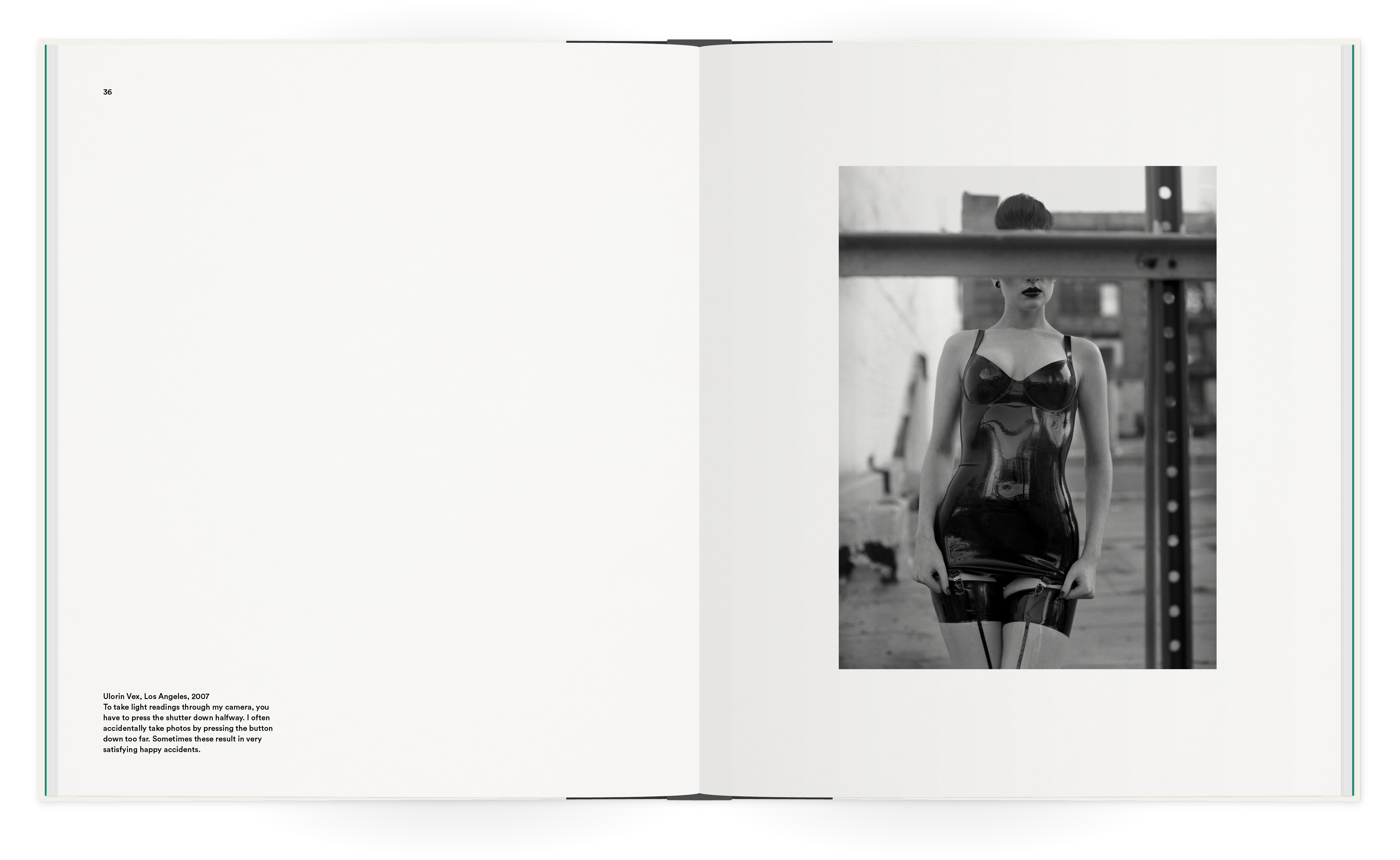
This kind of photography fascinates us. Perhaps it’s because latex usually has something of the ‘unreal’ or the ‘hyper-real’ about it. It is larger than life in how it exaggerates everything, from the wearer’s form to the lighting of the surrounding environment, reflected in its mirror-like surface. Besides this, it is a type of clothing we just don’t see around us in everyday life. For these reasons, especially for those who covet latex or somebody wearing latex, it can attain a kind of mythology about itself.
Candid photos like those in Extempore reconnect us with the realism of the material; that it does indeed exist, that it can even be down-to-earth and tried by anyone, often in a spirit of levity. That it is simply another interesting material. This reconnection is intriguing and exciting.
Steve was kind enough to answer a few questions for us about his work, and specifically about his work with latex.
For any of our readers not already in the know, do you have prior publications and collections of your photography which may serve as a good introduction to your work?
Previous to my upcoming book EXTEMPORE (click here to preorder before March 18), I’ve had a few books published of my work – all of which have been very popular amongst fetishists and art book collectors. My first book “The Beauty of Fetish” (Edition Stemmle) was published in 1998. I had started doing fetish photography in 1990 and quickly gained a big audience due to my style which was more artistically-forward for the genre at the time. Thanks to mainstream photography magazines and the classic fetish magazines Skin Two, Marquis, and Secret, my work was getting noticed. And this was before the internet as we know it today. The success of my first book led to a follow-up “The Beauty of Fetish: Volume 2”. Fast forward to 2015, when I started a 3-part 25-year anniversary of my work. One volume was released so far, and we have two more to go in the next few years.
What first inspired you about latex clothing as a subject matter for photography? What is it that keeps you intrigued by it and keep returning to it for different shoots?
Ever since I was a little kid, I had a fascination with women’s shoes and tight, shiny clothing. Once I became old enough to feel and understand sexual attraction, that fascination took on a whole new meaning. Even at a young age, I noticed how clothing tells a story about who’s wearing it. Women wearing fetish clothing project a sense of power and empowerment while retaining and owning their sexuality. That aura always appealed to me. Nudity is fine – the curves and lines of the female form is a work of art unto itself, but when you accentuate those curves with a shiny encasement, everything I love about the female form is exaggerated and strengthened and really reveals the character of the person inside the clothes.
What considerations and challenges does latex as a material or surface present in the composition of a shot? For any aspiring photographers, can you provide any tips you would give for shooting this material?
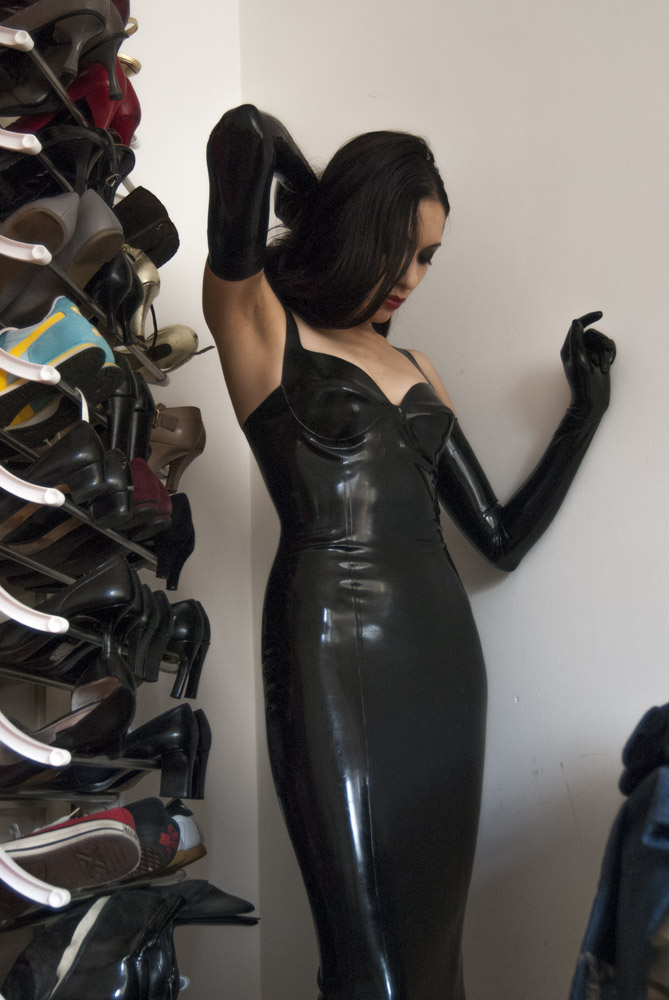
You have to know and love latex in order to shoot it correctly. It’s all about the shine – that’s what we all love about the look. Along with the shine, latex has to fit well with as few creases as possible. It has to fit like a tight glove – can’t look loose unless that’s the intention. So when composing or setting up a shot, it’s imperative that light is reflecting off the clothing’s surface perfectly. I’ve seen some professional photographers who want to try shooting latex but the result sometimes falls flat because they didn’t take into consideration the shine – that’s what the clothes are all about visually.
For models new to latex clothing at the time you shoot with them, what is their common reaction to first trying latex?
After the hassle of putting the latex on, once they see what it looks and feels like, they’re immediate converts. I love seeing them stare at themselves in the mirror rubbing the soft, silky surface with their hands. That feeling is then channeled into their attitude when they start posing for the camera. That confidence just makes the final photographs even more intense and personal.
Do you describe yourself as a fetish photographer, or is this a descriptive term mainly others apply to you? Does the term fetish seem overly loaded with preconceptions? Is it too often taken as seedy, for example, when the reality of your photos is that they are anything but? Conversely, do you find it an accommodating term, because it can encompass so many different meanings to different people and is, in fact, a welcoming, inclusive concept?
Upfront, I call myself a photographer. What I specialize in shooting is secondary. So I guess you can call me a photographer who shoots fetish. My photographs have multi-layered intentions. They’re not mere documentations of sexy fashion – they’re about the human being that is wearing the fashion. They’re also about light and composition. All these elements have to converge in order to make a successful photograph.
In the years before I started shooting fetish-themed imagery, I wanted to stay away from it, simply because I thought the genre was full of cliches and lacking in artistically-minded work – too many dominatrixes with teased hair with whips and chains. It wasn’t until I saw Bob Carlos Clarke’s book “The Dark Summer” in 1985 that I realized that fetish imagery could be photographed in an aesthetically pleasing way. That inspired me to shoot fetish-themed work the way that I wanted to. I wanted my work to be accepted by the fetish scene, the art world, and maybe even the mainstream in general. And that’s what led my first publisher, Edition Stemmle, to title my first book “The Beauty of Fetish” because before then, there wasn’t a lot of ‘beauty’ in the genre.
In recent years, latex has become a hit in fashion, attracting celebrities and performers and is often seen on the catwalk. Do you think any of your work might just as well be categorized as ‘Alternative fashion’ photography?
I feel like we’ve been discussing this topic since the early 1990s, maybe even earlier during the Frankie Goes to Hollywood era in the 1980s. I remember when Madonna started wearing latex in the mid ’90s, and everyone said that latex was then mainstream. Around that same time, we saw it on Janet Jackson, Spice Girls, Britney Spears, and many others. Numerous fashion designers around that time adopted it as well. But yes, there does seem to be an even larger presence these days, especially amongst pop and hip hop artists.
My work is definitely more fashion-oriented than sex photography. I’m mostly interested in the women and what they’re wearing – that is what my work is basically about. I’m not a ‘scene’ photographer and BDSM plays no part in my work, so yes, for me personally to label myself as an alternative fashion photographer is somewhat accurate, but the term fashion photographer could be misleading because I don’t shoot FOR designers (except for Syren) – it’s mostly personal work for myself.
Finally, how would you describe your own work?
That’s the hardest question of all. I get asked this at least once a week when I meet someone new and they ask what kind of work I do. It doesn’t matter how many times I’ve answered that question, I always go blank, and it takes me a while to come up with some sort of word soup answer that best describes what I do. I end up saying like “fine art edgy fashion erotic sorta stuff that’s mostly black and white and mostly shot on film and it’s real classy and not what you think fetish photography normally looks like, or something.” At that point, I take a deep breath and just grab my phone and show them a little portfolio I have on there. I think I need to just do that first and skip the embarrassing description.
Thank you to Steve Diet Goedde for taking part. His book ‘Extempore’ can be preordered before March 18 on Kickstarter.