Latex Cosplay part I: Official Costumes
Latex is a hugely popular material when it comes to dressing up as characters from films, games, anime or comics, topping its popularity even among the fashionistas on the red carpet. In this two-part post, I’ll look into the different reasons why latex is perfect for dressing as something right out of fiction, with examples to illustrate the point (that’s what you came for, right?)
I find that we can class latex cosplay under three umbrellas, the first of which this post shall deal with: authenticity.
The argument of authenticity goes as follows: the character actually wears latex, or is portrayed wearing latex in official promotions/advertisements. This is a cool category, because the movie and advertising budgets are usually high, and the costume department has money and a team of costume designers to work with. These act together towards creating a latex outfit that looks incredible on screen, but is also faithful to the imaginations of the original character artists. In the process, they often commission some of the top latex designers to bring their visions to reality. The end result is an iconic costume which inspires cosplayers to copy the latex look in order to be as faithful to their on-screen counterparts as possible.
Catwoman
The most iconic example of all has to be, of course, Michelle Pfeiffer’s Catwoman. This costume was made for the 1992 movie Batman Returns and features a white stitching effect, which was actually glued on to the catsuit afterwards. About 40 catsuits were made for the production by Syren Couture. Original costume designer Mary Vogt talks more about the process here. It remains the favoured portrayal of Catwoman today, in no small part due to the iconic costume (and another part due to the dire 2004 movie starring Halle Berry).

Silk Spectre II
For the movie adaptation of the graphic novel Watchmen, the sheer, flowing costume of Silk Spectre II was interpreted as figure hugging transparent latex. Not the only example of artistic liberty with the adaptation, I’m sure, but one which I don’t think I’d be complaining about even if I had read the source. Once again, it was Syren on hand to make the costume a reality, which Malin Akerman wore to play Silk Spectre II.

Lara Croft
Eidos started a trend by making the vest of the official Lara models out of latex. As far as I know, this began with the second Lara model in 1997, Rhona Mitra. Despite a rubber vest being about as impractical for an acrobatic treasure hunter as freakishly large, triangular breasts, the turquoise latex top became a mainstay for over ten years and at least seven different Lara models. It was partly because of sex appeal that got Lara Croft so famous, and a skin-tight vest played up to that.

Above: Official Eidos model Lara Weller
Samus Aran
The Star of Nintendo’s Metroid series. Nintendo made a latex suit canon by having their actress wear one in an advert for Metroid: Other M. Ever since, latex has been a standard choice of material to cosplay Samus wearing the blue ‘Zero Suit’. Thanks, Ninty!
Selene
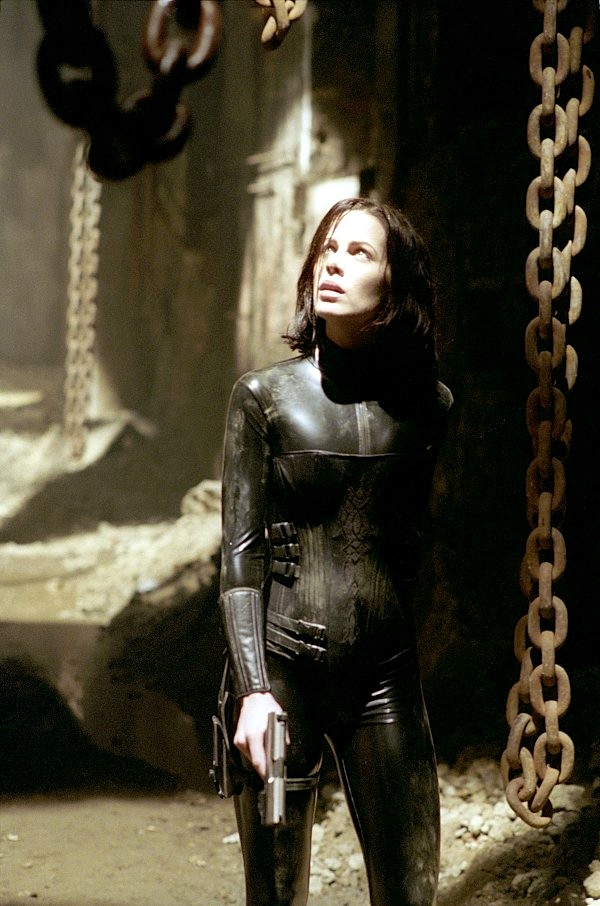
A vampire from the Underworld series of films played by Kate Beckinsale. It seems Kate has yet to tire of the black latex catsuit her character slinks around in, squeezing into it for a fifth time for next year’s Underworld: Blood Wars. Selene, along with trademark catsuit, is unique amongst the other characters mentioned here, because she was only ever an original creation for the Underworld movie series, as opposed to an adaptation from other media.
Psylocke
This summer’s X-Men: Apocalypse saw Olivia Munn’s Psylocke wear a latex version of the iconic blue ninja costume. Credit once again goes to Syren, the go-to designers for live action comic book characters’ outfits. Though interestingly, cosplayers have long preempted the movie by wearing latex Psylocke costumes. It seems only a natural choice for the skin tight, reflective costume Psylocke appears to be wearing in the X:Men comics.

And that brings this instalment to a close. Next time, we will look at the second category of latex cosplay, whereby the characters are never officially portrayed wearing latex, yet cosplayers find inspiration in the skin tight, often reflective non-descript materials their favourite characters are seen wearing – much like the case with Psylocke above, prior to the movie making the latex interpretation ‘official’. Until next time.