
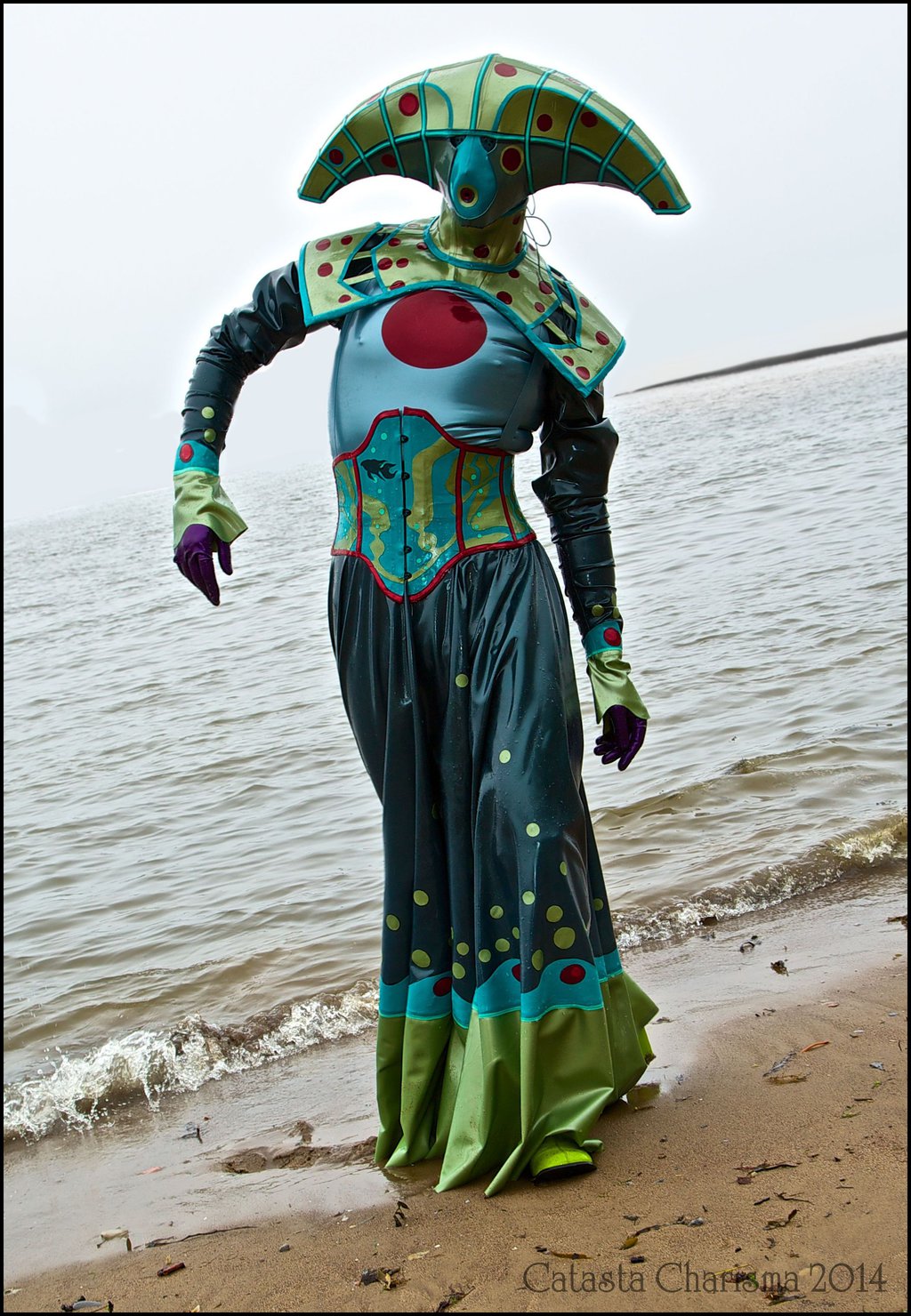
Catasta Charisma’s latex garments represent the high bar for intricacy and creativity of design. His focus on detail is evidenced not only in the latex creations themselves but also in his self-published e-book ‘The Compendium of Rubber Garment Making’ where he lays out years of accumulated knowledge in this field, knowledge which draws on a background of tailoring with traditional fabrics. At over 600 pages, it is the bible for those serious about the art.
However, Catasta still has much more to say on the subject of rubber wear, outside of his practical how-to manuals. The Dark Shiny Fashion Alternatives blog held a Q&A with Catasta, and due to its length it has been posted in three parts. This time, we won’t be reposting it here as we’ve done with previous Q&As, but instead encourage you to head to the above blog and read the whole thing.

Catasta’s examination of everything latex goes so far as analysing the very term itself, helping us understand and define the difference between “latex” and “rubber”. In the process of which, he gives us a succinct overview of how latex gets from tree to our wardrobe:
I think before continuing I should provide some clarity as to why I use the word rubber instead of latex. Latex is a liquid found in many thousands of plants that is thought to help regulate its temperature as well as provide protection against bugs if the surface of the plant is damaged, oozing out and sealing the wound, potentially trapping the critters and making the plant taste very bitter. Depending on the plant from which the latex is gathered it forms various products such as chewing gum, opium and of course rubber.
The rubber from which rubber garments are made comes from the Rubber Tree, Hevea Brasiliensis. The trees are cut, the latex collected, formic acid added to speed up the coagulation that separates the rubber from the latex into a solid form. The rubber is then sent to manufacturers who put it through various processes to help stabilize the product. In regards to fashion the form which rubber takes is in sheeting which comes in various thicknesses.
We literally saved paragraphs and paragraphs of text from this Q&A which we found thought provoking and resonated with us, intending to post them as quotes. In the end, however, we found it unnecessary to pick out excerpts when the entirety merits reading.
We do get the feeling we’ll be quoting Catasta Charisma in future, though, where we would like to give a more fuller treatment to some of the fascinating subjects he raises. His is a philosophy of wearing rubber.
Photos under CC license. Header Photo: Goblintographer; inline Photos: John Turner