
sukeban-latex-wrestling

Sukeban – the all-female latex-clad wrestling troupe

An article about the latex-wearing all-female pro wrestling league Sukeban is long overdue here at WearLatex. We time this release two weeks after the troupe just had their biggest ever sell-out event in New York, the Sukeban World Championship Fight.

Understanding what Sukeban is may take some unpacking, but we’ve got you!

Professional wrestling is not so much sport as it is theatre. Gather together a bunch of larger-than-life, almost comic-book personas — with suitably outlandish costumes — and pitch them against each other in wildly entertaining choreographed fights.

With this as a creative framework, French designer Olympia Le-Tan founded the all-girl Japanese pro wrestling league “Sukeban”, as a vehicle for performance art and fashion design.


The name comes from the Japanese girl gangs of the 1960s and 70s, a rich vein of inspiration for genre movies. Think girls in sailor school uniforms, the cute innocent outfit contrasted by a big sword or some other such deadly weapon slung over their shoulder. It’s the inspiration for the “Gogo” character in Kill Bill.

At the time of writing there are six teams in the Sukeban league, each with their own distinct look and attitude. Le-Tan was also influenced by the 1979 movie The Warriors — where a fictional NYC is populated by roving gangs, each with their own distinct looks and personalities.

There are the Harajuku Stars, the Vandals, Dangerous Liaisons, the Cherry Bomb Girls, Tokyo Toys and Stray Cat — each one a self-contained world of attitude, aesthetics, and grudges.
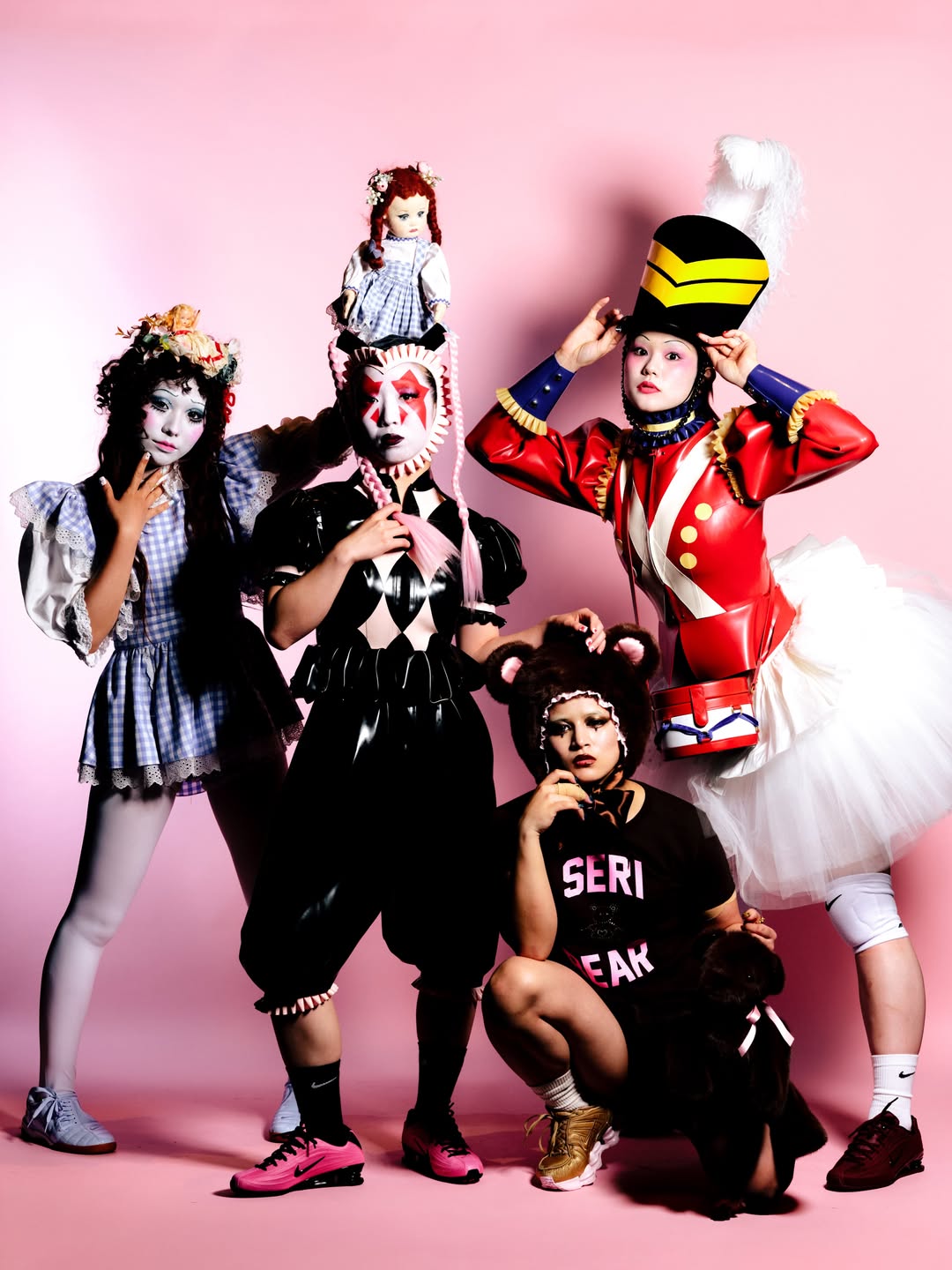
 

Tokyo Toys


Within the gangs, the individual wrestlers have their own Sukeban personas, conceptualised around their personalities and fighting styles. Backstage, the transformation takes hours: UV-reactive makeup applied, wild hair extensions fitted, bright latex donned. With their looks complete and the cameras rolling, they snap into character.

The creative vision behind the costumes is as carefully considered as any haute couture collection, with the list of collaborators reading like a fashion week credits list. Le-Tan describes the whole endeavour as “a fashion show, but with restrictions, and with a very different casting.” Bazaar

There was one non-negotiable requirement from the wrestlers themselves: the outfits had to stretch.

Testing materials, Le-Tan gravitated to latex, and the rest followed naturally. Dawnamatrix crafted the sailor costumes of the Harajuku Stars. while Soft Skin Latex supplied other outfits, such as the puffy sleeve tops, rubber bloomers, and frill-edged latex hoods. But beyond the technical, each outfit is above all a magnification of the woman wearing it. Olympia is clear “Their personalities definitely come first. They are the inspiration.” Wrestler Nagisa puts it another way: “I really try not to appear as a character, but more as an extension of myself.”
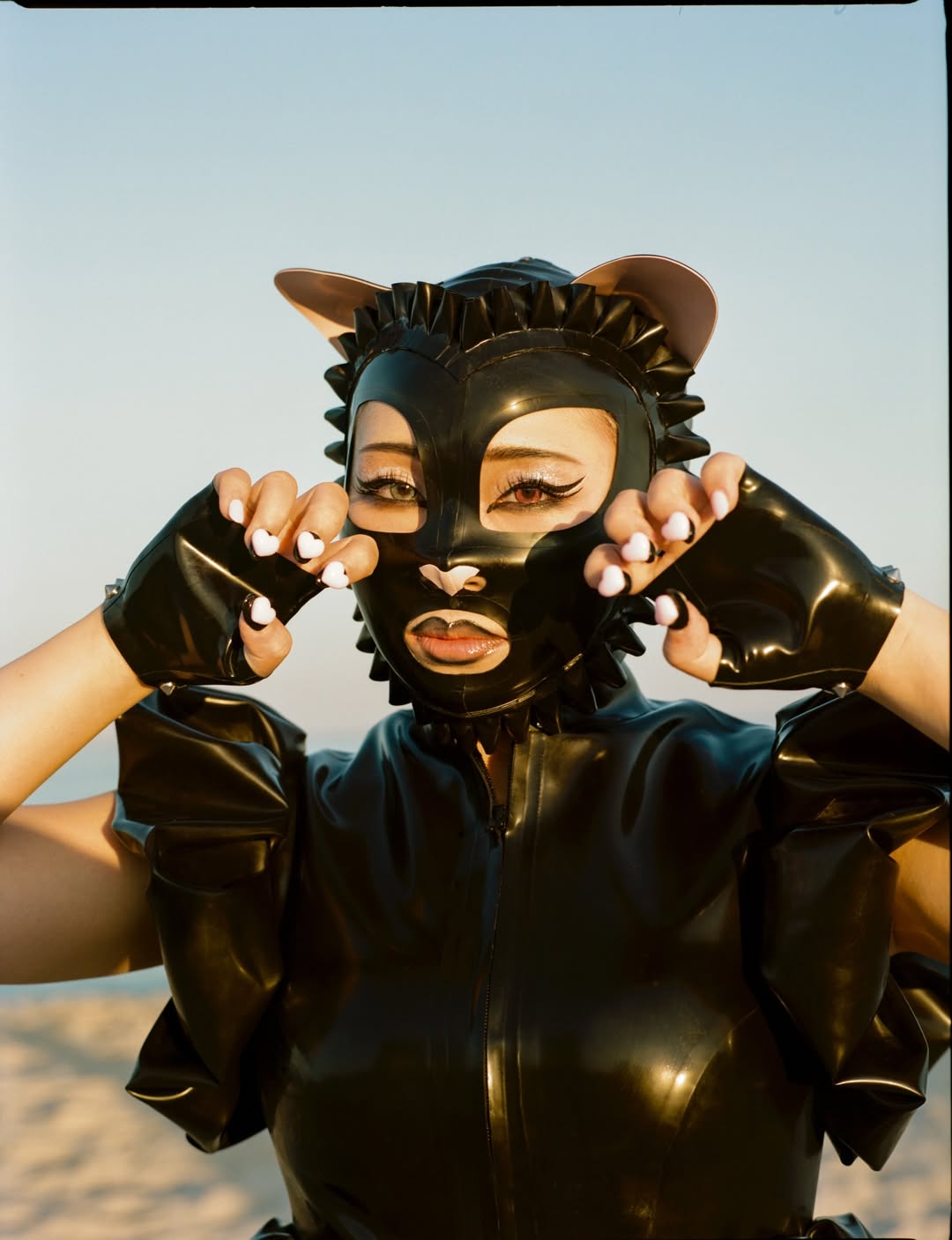


Atomic Banshee said it plainly:

“When I’m in my full costume, I feel transformed. Pro-wrestling is a sport where visual appeal is a major part of the excitement, so I believe paying attention to appearance is extremely important. Doing so enhances the audience’s enjoyment and also makes me feel mentally and physically prepared. In pro-wrestling, and especially in Sukeban, I believe the way you present yourself is the most important thing.”

Sound familiar? It should. That exact sentiment — latex as transformation, as alter-ego, as the means by which you step into a larger version of yourself — is the thread running through almost everything we write about here. Leave it to a wrestling ring to demonstrate the point most viscerally.

Tsukumogami wow latex

Dawnamatrix wins World of Wearable Art Award

Dawn Mostow and Ben Gould, also known by their latex brand Dawnamatix, were crowned the winners at the World of Wearable Art contest.

Dawn has been a finalist on eight occasions, five of which were in collaboration with Ben. This is the first time the partners have won the top prize Supreme WOW Award.

Dawn has often taken inspiration from her love of Japan in her latex designs, and this years entry “Tsukumogami” is based on the concept of well-loved household objects becoming imbued with a spirit after long years of use and care.

Thus we see blue and white ceramic vases rendered as living entities, the surface of latex evoking the high shine and glint of porcelain, while at the same time moulding to the body and appearing organic.

Latex so often becomes wearable art in the levels of creativity behind its craftmanship, and then also in the transformation it can effect when worn. It’s wonderful to see this realised and recognised on a big stage. Congratulations to Dawnamatrix!

dawnamatrix latex girls_50

Billboard interviews Dawnamatrix

Billboard has interviewed latex designer Dawn Mostow of Dawnamatrix. Read the full interview here.

Interviews with latex designers in mainstream publications with high readership are always significant as they present an opportunity, not only for the designers in question but for latex clothing in general to be introduced to a new, wider audience. Such interviews often broach the subject of latex becoming mainstream:

There have been dozens of superhero movies, music videos, and fashion collections featuring latex in the 2010’s decade alone.  Latex has been mainstream for a while now, and we’ve reached a level of comfort with the material that sees it incorporated into daily fashion.

And let’s not ignore the part played by the interviews and articles themselves in propagating and repeating this signal that latex = mainstream.


I think the interview is particularly good in that it covers wide ground, including Dawn’s influences, methods, how she began working with latex, and the famous projects she has been involved in. The article doesn’t just skirt over these subjects though, offering such details as design sketches, and exploring Dawn’s history of living and studying fashion in Japan and how this has inspired not just her designs but her design process:

Especially inspiring is how Harajuku fashion represents all of style history existing simultaneously, and the wearers go about daily activities like dining, shopping, and strolling in a park rather than just reserving that fabulous attire for dark nightclubs.

Dawn even offers some practical advice as to how one might follow this Harajuku example and introduce some latex into our daily, casual wardrobe. Because indeed, latex is too fabulous to remain only for the nightclubs:

Latex separates are a great way of incorporating some eye-catching interest into your look, and depending on the fit of the garment and personal preference, latex can be quite comfortable. Leggings, skirts, or even a latex bowtie or collar are a fun way to mix-and-match into your wardrobe.


Despite all this talk of fashion, looking fabulous and eye-catching, she doesn’t lose sight of the principal reason for the enduring popularity of latex staple outfits like catsuits: latex feels fabulous too:

And, of course, bodysuits/catsuits; these are the classic and quintessential latex garments that can transform a human into a super-human!


The best part of all, for me, is that Dawn is given ample opportunity to put into words just what it is about latex clothing that attracts people not only to wear it but also for people like her to make it their career:

It is futuristic, evocative, playful, with visual qualities similar to animation and graphic design. It demands attention and invites questions, while transforming the wearer. I fell in love!

It’s sensual, bold, mysterious, strong, and everything these celebrities represent wrapped up in a garment. It turns heads, and makes headlines. Latex’s look is futuristic and freeing. There’s no lying or hiding in latex. A celebrity visage in latex alludes to an empowering future that is within our grasp.


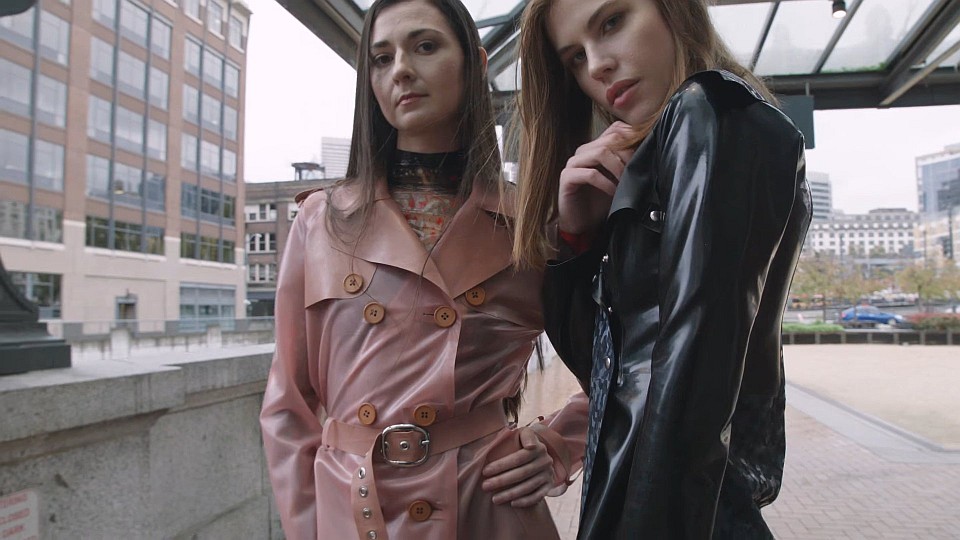
Below is a video not part of the Billboard article showing off some of the Dawnamatrix raincoats and outerwear from the new Waterproof collection mentioned in the interview: